

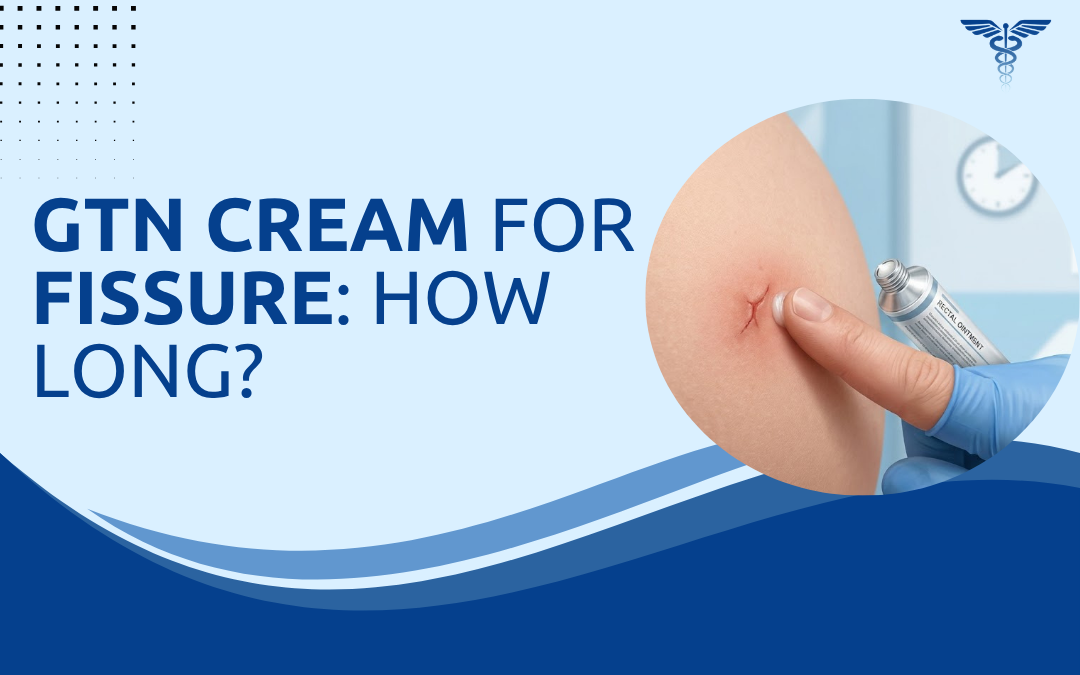
GTN ointment is applied twice daily for six to eight weeks for anal fissures. It releases nitric oxide into the anal canal, relaxing the internal sphincter, dropping resting anal pressure, and improving blood supply to the wound base. Around 50 to 70% of acute fissures heal with a full course. Headache from systemic nitrate absorption is the main side effect and the most common reason patients stop before the fissure has fully closed.
According to Dr. Rajeev Premnath, a leading proctologist in Bangalore, GTN works when patients use it consistently for the full prescribed duration. The ones who stop at three weeks because the pain settled are the ones who come back with the fissure still open.
How Should GTN Ointment Be Used for a Fissure?
Correct application matters as much as duration. Getting either wrong reduces healing rates significantly.
- Duration: Six to eight weeks is the standard course. Pain often settles before the fissure has fully healed, so symptom relief isn’t the right signal to stop. The full mucosal repair takes longer than the pain resolution does.
- Application: A small amount, roughly the size of a rice grain, applied just inside the anal canal twice daily. More doesn’t work better. Applying too much increases systemic absorption and drives the headache side effect that pushes patients to quit.
- Headache management is what determines whether patients complete the course or abandon it. Applying the ointment at night reduces the headache impact during waking hours. Paracetamol before application helps in patients with persistent symptoms.
- What to combine it with: GTN works best alongside dietary fibre increases, adequate hydration, and sitz baths. The ointment handles sphincter tone. Diet and sitz baths handle stool consistency and post-defaecation spasm. Skipping either reduces overall healing rates.
Pain settling within the first two weeks doesn’t mean the fissure has healed. Continue the full prescribed course and follow up for a proper assessment of fissure treatment response before stopping.
When Does GTN Stop Being the Right Option?
GTN has a ceiling. Past that ceiling, continuing it produces side effects without additional healing benefit.
- No healing at eight weeks: A fissure that hasn’t responded after a full GTN course isn’t going to respond to more GTN. Diltiazem cream is the next topical option, with comparable healing rates and fewer headaches, or Botox injection if topical therapy has already failed twice.
- When headaches are severe enough to stop daily application, the ointment isn’t being used consistently enough to work. Switching to diltiazem at that point makes more clinical sense than persisting with a medication the patient can’t tolerate.
- Recurrence after a completed course: Healing after GTN doesn’t mean the fissure won’t return. If it comes back within weeks of stopping, the underlying sphincter tone problem hasn’t been resolved and a procedural option needs to be considered.
- Chronic fissures with scar tissue and a sentinel pile at the edge are unlikely to respond to GTN alone. The structural changes at the wound base need lateral internal sphincterotomy or laser fissurectomy to create the conditions for closure.
Most fissures that haven’t healed after eight weeks of topical therapy are in chronic territory. Our previous blog on chronic fissure covers when surgery becomes the appropriate next step.
Why Choose Dr. Rajeev Premnath?
Dr. Rajeev Premnath holds MBBS, MS (Gen Surg.), FRCS (Glasg.), FEBS, FICS, FACS, FIAGES, FMAS, and a Diploma in Laparoscopy from France. He’s been managing acute and chronic fissures at Ramakrishna Super Speciality Hospital for over 20 years, with a structured approach that moves through conservative options in the right sequence before escalating to procedural treatment.
GTN failures at this practice get properly assessed before anything surgical is considered. Diltiazem, Botox, and LIS are all available in the right clinical sequence.
Using GTN but pain keeps returning or the headaches are unbearable?
FAQs
How long should GTN ointment be used for a fissure?
Six to eight weeks, twice daily. Stopping early when pain settles is the most common reason fissures don’t fully heal.
What are the side effects of GTN ointment for fissure?
Headache from systemic nitrate absorption. Applying less or switching to a night-time dose usually reduces it.
What happens if GTN ointment doesn't work for a fissure?
Diltiazem cream or Botox injection is the next step. Lateral internal sphincterotomy if topical therapy has failed.
Can GTN ointment heal a chronic fissure?
Sometimes, but success rates are lower than in acute cases. Many chronic fissures need procedural intervention.
Disclaimer:
This blog is for educational and informational purposes only and should not be considered professional advice.