

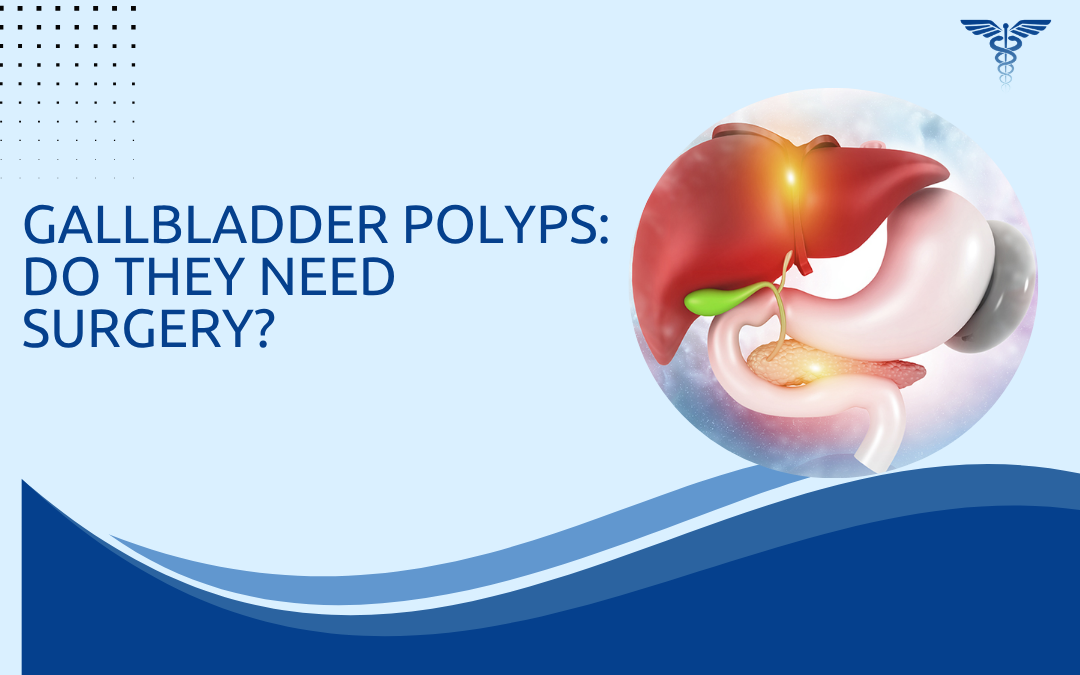
Most gallbladder polyps don’t need surgery. Polyps under 10mm in patients with no risk factors are monitored with serial ultrasound rather than removed immediately. Polyps over 10mm, polyps growing on repeat scans, polyps in patients with primary sclerosing cholangitis and any polyp causing symptoms all need cholecystectomy. The 10mm threshold is the key number. Below it with no risk factors means surveillance. At or above it means surgery.
According to Dr. Rajeev Premnath, gallbladder stone removal, “The size and growth rate of a gallbladder polyp on serial ultrasound determines whether surveillance continues or whether cholecystectomy is the right call. Most polyps never reach the surgical threshold.”
Getting the polyp properly characterised on ultrasound and understanding which monitoring schedule applies avoids both unnecessary surgery and unnecessary anxiety about something that will never become a problem.
When Do Gallbladder Polyps Actually Need Surgery?
Not all polyps are the same. Cholesterol polyps are the most common type and almost never malignant. Adenomatous polyps carry genuine cancer risk. Size and growth rate are what separate the ones needing surgery from the ones needing surveillance only.
- Size over 10mm. Any gallbladder polyp measuring 10mm or more on ultrasound needs cholecystectomy regardless of symptoms because the malignant potential at this size is high enough that surveillance alone isn’t a safe management strategy.
- Growth on serial scans. A polyp that was 6mm at first scan and 8mm six months later is growing. Growing polyps regardless of absolute size at the time of detection need surgery because the growth trajectory matters as much as the current measurement.
- Symptoms present. Polyps causing right upper quadrant pain, nausea or biliary colic need removal even when under 10mm because symptomatic polyps don’t settle conservatively and the gallbladder should come out.
- Risk factors present. Primary sclerosing cholangitis, age over fifty with a polyp of any size, Indian subcontinental ethnicity and coexisting gallstones alongside polyps all lower the surgical threshold below 10mm because malignant transformation risk is genuinely higher in these groups.
The majority of polyps found incidentally on ultrasound are cholesterol polyps under 6mm in patients with no risk factors. Those need a follow-up scan at six months then annually for two years and nothing more if they stay stable.
Patients wanting to understand what gallbladder removal surgery actually involves once the decision for cholecystectomy is made should look at mini laparoscopy for gallstones which covers the procedure honestly.
What Does the Monitoring Schedule for Gallbladder Polyps Look Like?
Surveillance. Not surgery. For most polyps that’s the correct answer. But surveillance done properly is specific. Not just “come back if anything changes.” Actual scheduled ultrasound at defined intervals.
- Polyps under 6mm. Ultrasound at six months then annually for two years. If stable at two years with no growth and no new symptoms the polyp can be discharged from active monitoring in most guidelines.
- Polyps 6mm to 9mm. Six monthly ultrasound for two years minimum. Any growth at all during this period moves the patient toward surgical assessment rather than continued surveillance alone.
- Polyps with risk factors. Lower threshold applies. Discuss with surgeon even for smaller polyps if primary sclerosing cholangitis, age over fifty or coexisting gallstones are present because standard size thresholds don’t fully apply in these groups.
- Polyps at 10mm or above. Straight to surgery. No further surveillance phase. Cholecystectomy is the recommendation at this size because the risk of malignancy outweighs any benefit from continued monitoring.
Surveillance isn’t indefinite. And it isn’t casual. Missing a scheduled scan means missing a growing polyp that crossed the surgical threshold between appointments. That’s not an abstract risk. It happens when monitoring gets treated as optional rather than scheduled.
Still unsure about whether a gallbladder finding actually needs urgent attention or can wait for a scheduled appointment, this older piece on what happens if gallstones are left untreated covers the consequences of delayed treatment across different gallbladder conditions.
Why Choose Dr. Rajeev Premnath?
Dr. Rajeev Premnath is a General and Laparoscopic Surgeon with over 20 years managing gallbladder conditions including polyp surveillance and cholecystectomy for polyps at surgical threshold. MBBS, MS General Surgery, FRCS Glasgow, trained at IRCAD France. Advanced single incision laparoscopic training in Singapore. Head of Day Care Surgery, Ramakrishna Group of Hospitals.
Patients who get proper polyp characterisation and a defined surveillance schedule know exactly what they’re watching for and when. Those who get told “it’s just a polyp, don’t worry” and never get a follow-up scan come back two years later with a 14mm polyp that needed surgery at 10mm.
Call +91 90082 04466 to book your consultation.
FAQs
Do all gallbladder polyps eventually need to be removed?
No, most polyps under 10mm in patients with no risk factors are monitored with serial ultrasound and never need surgery.
What size gallbladder polyp requires surgery?
Polyps at or above 10mm need cholecystectomy regardless of symptoms because malignant potential at this size is too high for continued surveillance.
Can gallbladder polyps turn into cancer?
Adenomatous polyps carry genuine malignant potential especially above 10mm while cholesterol polyps which are more common have very low cancer risk.
How often should gallbladder polyps be scanned on surveillance?
Polyps under 6mm need ultrasound at six months then annually for two years while 6mm to 9mm polyps need six monthly scans for two years minimum.