

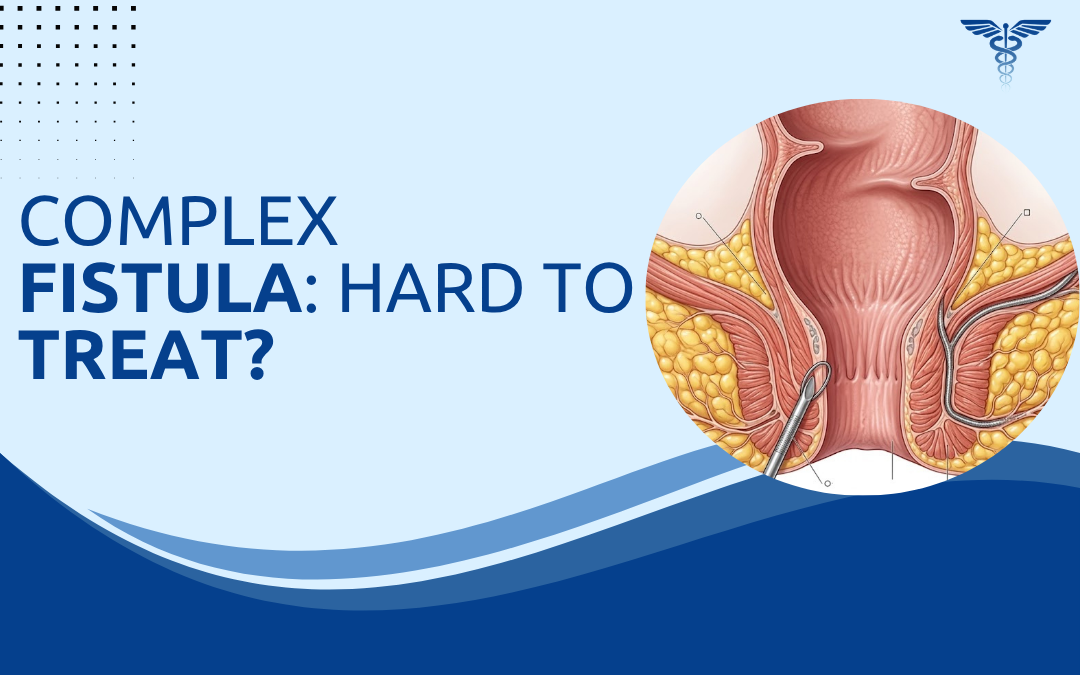
Surgery fixes most fistulas. Clean tract, internal opening closed, done. But a subset of cases just don’t behave that way. The tract runs through the sphincter muscle, or it branches into paths that don’t show up without imaging, or the patient’s already had one operation that didn’t hold. Add Crohn’s disease into the picture and you’ve got inflamed tissue that keeps reopening whatever the surgeon closes. These aren’t rare edge cases. They’re the ones that land back in clinic three months later wondering why nothing worked.
According to Dr. Rajeev Premnath, a trusted fistula specialist in Bangalore, Complex fistulas don’t fail because of poor surgery. They fail when the full tract anatomy isn’t mapped before the procedure even starts.
What Factors Actually Make a Fistula Complex?
Classification directly determines the surgical approach. An incorrect assessment at this stage significantly increases the risk of recurrence.
- Sphincter involvement: When the tract runs through the external sphincter, cutting it open to drain the infection causes incontinence. Standard fistulotomy simply isn’t an option here.
- Hidden secondary tracts: Some branches only show up on MRI or under a fistuloscope. Miss one and the infection restarts from there. That’s the most common reason a repair fails months later.
- Crohn’s disease keeps breaking down tissue from the inside regardless of what the surgeon closes. No operation holds without medical management running alongside it.
- Scarring from prior surgery: Tissue planes shift, the sphincter may already be thinned, and the margin for error is smaller than in a first-time case.
Skipping a proper MRI before operating isn’t caution, it’s how recurrences are made. See a specialist proctologist for a full workup before any plan is drawn up.
Which Treatments Work When a Fistula Is Complex?
Treatment selection depends on sphincter function, tract anatomy, and the extent of scarring from any prior surgical intervention.
- Seton placement: A loose thread through the tract drains infection slowly without touching the sphincter at all. Used as a first stage in high fistulas to control sepsis before a definitive repair.
- LIFT: Ties off the internal opening from the intersphincteric space with no sphincter division. Works well when the anatomy is clean and there’s no significant scarring from prior attempts.
- VAAFT: The fistuloscope goes inside the tract and shows everything under direct vision, including branches that probing misses. Internal opening closed, lining treated, sphincter untouched throughout.
- Advancement flap: Healthy rectal mucosa gets brought over to close the internal opening from inside. Last resort when other options have already failed.
MRI findings, sphincter manometry, and prior surgical history drive the final call. For a step-by-step breakdown of the most sphincter-friendly option available, our previous blog on VAAFT surgery covers the full procedure.
Why Choose Dr. Rajeev Premnath?
Dr. Rajeev Premnath holds MBBS, MS (Gen Surg.), FRCS (Glasg), FEBS, FICS, FACS, FIAGES, FMAS, and a Diploma in Laparoscopy from France. With 20+ years of surgical experience at Ramakrishna Super Speciality Hospital, he was the first surgeon in Karnataka to perform VAAFT for anal fistula and continues to manage complex and recurrent cases where previous treatment has failed.
Sphincter function is preserved and recurrence rates stay low when the tract is fully mapped before surgery begins. That preparation is what drives outcomes, not the choice of technique alone.
Had a fistula repair that didn’t last, or still getting discharge after treatment?
FAQs
What makes a fistula complex?
Multiple tracts, sphincter involvement, a prior failed repair, or Crohn’s disease driving recurrent breakdown.
Can a complex fistula heal without surgery?
No. The tract won’t close on its own and antibiotics don’t fix it. Surgery is the only way to seal it permanently.
Why does fistula keep coming back after surgery?
Usually a missed secondary tract, an internal opening that wasn’t fully closed, or active Crohn’s that keeps breaking the repair down.
Is VAAFT the right option for every complex fistula?
Not always, but it handles most of them well because direct visualisation catches what probing and imaging alone miss.
Disclaimer:
This blog is for educational and informational purposes only and should not be considered professional advice.