

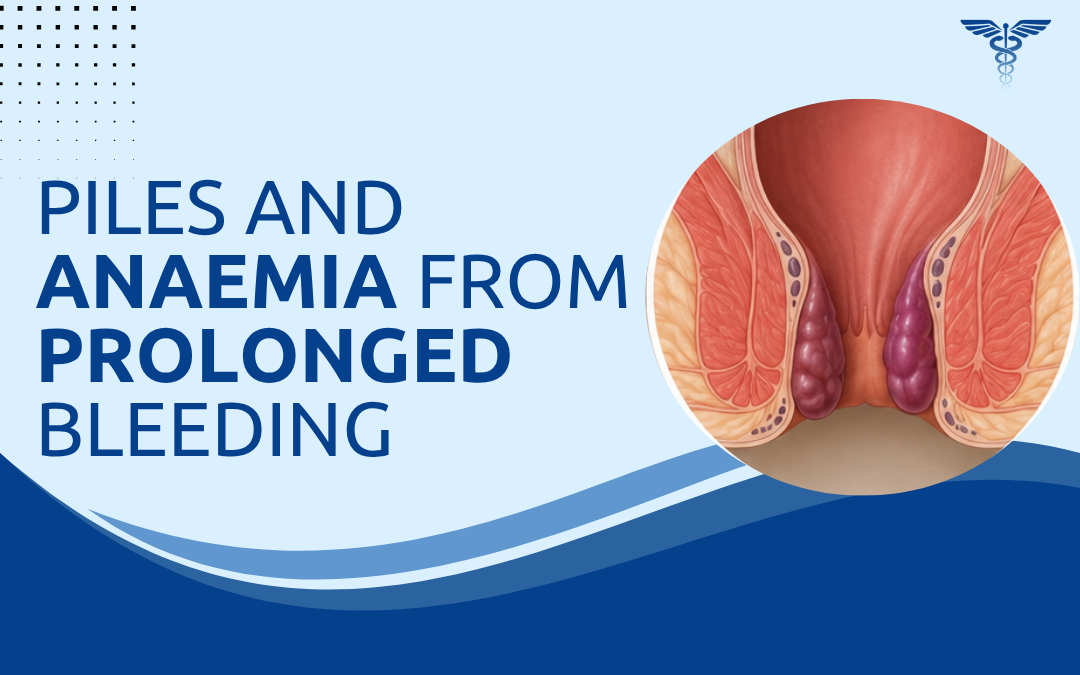
Piles cause anaemia through attrition. Internal haemorrhoids bleed with every bowel movement small amounts each time, but relentless. Over weeks and months, iron stores deplete, red cell production falls, and iron deficiency anaemia takes hold. Patients rarely connect their fatigue to the bleeding because they’ve normalised it. By the time a blood test flags the anaemia, the haemorrhoids have typically been bleeding for months.
According to Dr. Rajeev Premnath, a leading piles specialist in Bangalore, “Piles-related anaemia is more common than patients realise. They’ve normalised the bleeding because it doesn’t hurt. But a few millilitres lost every day for six months adds up to a significant iron deficit that iron tablets alone won’t fix while the source keeps bleeding.”
How Does Prolonged Piles Bleeding Lead to Anaemia?
Blood loss from piles is gradual. That’s exactly why most patients don’t connect the fatigue to the bleeding until the anaemia is already significant.
- Chronic low-volume loss: A few millilitres per bowel movement doesn’t look alarming. Repeated daily for three to six months, it outpaces what the body can replace from available iron stores. No single dramatic bleed required.
- Iron store depletion: Serum ferritin falls first, often long before haemoglobin drops enough to flag on routine bloods. Patients feel the fatigue and don’t understand why. The blood test looks borderline. The piles keep bleeding.
- Grade matters: Grade II and III piles bleed more volume per episode than Grade I and prolapse more frequently. Higher grade means more blood lost per week. Patients presenting with anaemia and Grade III piles are not unusual in a busy proctology clinic.
- Delayed presentation: Most patients manage piles bleeding with home remedies for months before seeking any assessment. That delay converts a correctable early iron deficiency into moderate or severe anaemia requiring both supplementation and urgent piles intervention simultaneously.
Treating the anaemia without stopping the bleed achieves nothing lasting. Definitive piles treatment stops the source and lets iron supplementation actually work.
What Are the Signs and How Is It Managed?
Piles anaemia doesn’t arrive loudly. The symptoms build slowly and get misattributed to everything else first.
- Symptoms: Fatigue, pallor, breathlessness on minimal exertion, palpitations. In younger patients these get blamed on stress. In older patients they trigger cardiac workups. The rectal bleeding is already happening but nobody connects it to how the patient is feeling.
- Investigation: Full blood count shows low haemoglobin and low mean corpuscular volume. Serum ferritin confirms iron deficiency. Proctoscopy identifies the bleeding piles. Patients over 40 or with any bowel habit change need colonoscopy to exclude colorectal cancer as a concurrent or alternative source.
- Iron replacement: Oral iron corrects the deficiency over six to eight weeks. But only if the bleeding stops. Taking iron while piles continue bleeding is a race you eventually lose. Intravenous iron is used when oral absorption is poor or the anaemia is severe.
- Definitive treatment: Rubber band ligation, laser haemorrhoidoplasty, or stapled haemorrhoidopexy stops the bleeding at source. Which one depends on grade and anatomy. No iron protocol sustains normal haemoglobin while active bleeding continues.
Rectal bleeding in a patient already known to be anaemic needs urgent assessment, not more watchful waiting. Our previous blog on piles after childbirth covers another presentation where prolonged bleeding and iron loss go unrecognised far too long.
Why Choose Dr. Rajeev Premnath?
Dr. Rajeev Premnath is a General and Laparoscopic Surgeon with MBBS, MS (Gen Surg.), FRCS (Glasg.), FEBS, FICS, FACS, FIAGES, FMAS, and a Diploma in Laparoscopy from France. He’s been managing piles across all grades at Ramakrishna Super Speciality Hospital for over 20 years, including presentations where anaemia is the presenting complaint and the piles are found only on examination.
Bleeding piles here get graded properly before any treatment decision. The right intervention for the right grade, not a one-size approach applied regardless of what the proctoscope shows.
Persistent fatigue, pallor, or breathlessness alongside rectal bleeding at every bowel movement?
FAQs
Can piles cause anaemia?
Yes. Prolonged bleeding from internal piles depletes iron stores and causes iron deficiency anaemia over time.
How much bleeding from piles causes anaemia?
No fixed threshold. Chronic low-volume daily bleeding over months depletes iron without any single dramatic bleed.
How is anaemia from piles treated?
Iron supplementation corrects the deficiency but definitive piles treatment is needed to stop the ongoing blood loss.
When should piles bleeding be investigated further?
Bleeding in patients over 40, with bowel habit change, or not improving after piles treatment needs colonoscopy.
Disclaimer:
This blog is for educational and informational purposes only and should not be considered professional advice.