

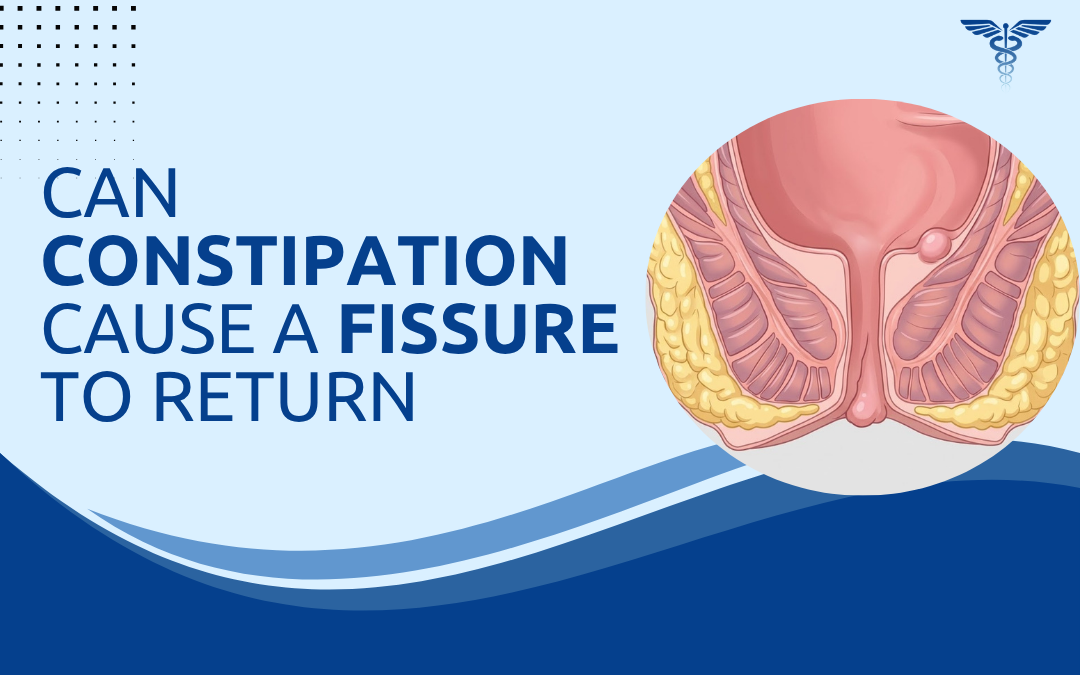
Constipation and fissure recurrence are directly linked. Hard stools re-tear healed anal mucosa with every bowel movement, which is why a fissure that closed completely can reopen weeks later without any other explanation. The fissure closes, constipation returns, the next hard stool does the same damage again. Surgery fixes the sphincter problem. It doesn’t fix constipation. Both need addressing for the recurrence to actually stop.
According to Dr. Rajeev Premnath, a trusted fissure specialist in Bangalore, Most fissure recurrences are preventable. The surgery worked. But patients go back to low fibre diets, stop drinking enough water, and the next hard stool does exactly what the last one did. Treating the fissure without managing the constipation is treating half the problem.
How Does Constipation Directly Drive Fissure Recurrence?
The fissure doesn’t come back randomly. Every recurrence follows the same mechanical sequence, and constipation is at the start of it every time.
- Hard stool trauma: Large, hard stools stretch the anal canal beyond its elastic limit during passage. The posterior midline is the weakest point anatomically, and healed scar tissue there tears before surrounding mucosa does.
- Straining: Prolonged straining on the toilet elevates sphincter tone and drives hard stool through a tight canal at the same time. Two problems compounding each other. Without dietary correction, that combination makes recurrence close to guaranteed.
- Pain-retention cycle: Once the fissure reopens, defaecation becomes painful and stool gets withheld. Retained stool hardens further. The next attempt causes more trauma. The cycle accelerates.
- Incomplete healing: Repeated minor trauma at a partially healed site builds scar tissue rather than healthy mucosa, converting an acute recurrence into a chronic fissure with fibrosis and sentinel pile formation.
Correcting stool consistency is not optional after fissure treatment. A clinical review for ongoing fissure treatment is needed when recurrences keep happening despite dietary effort.
What Prevents Fissure Recurrence After Treatment?
What patients do after treatment matters as much as the procedure itself. Most recurrences happen because the post-operative dietary changes don’t stick.
- Dietary fibre: Twenty-five to thirty grams daily keeps stools soft and formed without straining. Fruits, vegetables, whole grains, and legumes achieve this consistently when dietary change is genuine rather than token.
- Hydration: Eight to ten glasses of water daily. Fibre without adequate water hardens rather than softens stool. The two work together or neither works effectively.
- Stool softeners: Osmotic agents like lactulose or polyethylene glycol maintain soft stool consistency during the healing phase. A bridge measure, not a substitute for dietary correction.
- Bowel habit correction: Responding to the defaecation urge promptly, spending minimal time on the toilet, no phone use during defaecation. These behavioural changes reduce straining more than patients expect. And they’re the ones most consistently ignored.
A fissure that keeps recurring despite proper dietary management and completed topical treatment has likely developed chronic features that conservative measures won’t resolve. Our previous blog on fissure vs fistula covers how to distinguish between the two conditions before any treatment decision is made.
Why Choose Dr. Rajeev Premnath?
Dr. Rajeev Premnath is a General and Laparoscopic Surgeon with MBBS, MS (Gen Surg.), FRCS (Glasg.), FEBS, FICS, FACS, FIAGES, FMAS, and a Diploma in Laparoscopy from France. Over 20 years at Ramakrishna Super Speciality Hospital managing acute, chronic, and recurrent fissures. Every case gets assessed for the bowel habit driver before any surgical option is even discussed.
When a fissure comes back, the question isn’t which procedure to repeat. It’s why the first one didn’t hold, and that gets answered before anything else.
Fissure that keeps coming back despite treatment?
FAQs
Can constipation cause a fissure to come back?
Yes. Hard stools re-tear a healed fissure with each bowel movement. Constipation is the most common driver of fissure recurrence.
How does constipation cause an anal fissure?
Hard stools exert excessive force on the anal mucosa during defaecation, causing a tear at the posterior midline of the anal canal.
What prevents a fissure from recurring after treatment?
Dietary fibre, adequate hydration, and stool softeners during the healing phase address the underlying cause and reduce recurrence risk.
When does a recurring fissure need surgery?
When it recurs repeatedly despite dietary correction and topical treatment, lateral internal sphincterotomy or laser fissurectomy is needed.
Disclaimer:
This blog is for educational and informational purposes only and should not be considered professional advice.