

Stapled haemorrhoidopexy (PPH) treats Grade 3 and 4 internal haemorrhoids by lifting prolapsed tissue back into place with a circular stapler placed above the pain-sensitive dentate line. That usually means less pain and faster recovery than conventional haemorrhoidectomy. But it only suits the right patient. Grade 1 and 2 piles, external haemorrhoids, and fibrotic piles that can’t be repositioned don’t benefit from it.
According to Dr. Rajeev Premnath, piles specialist in Bangalore, “Stapled haemorrhoidopexy gives excellent results in the right Grade 3 and 4 patient but offering it to someone with predominantly external disease or fibrotic piles is a setup for a poor outcome and a frustrated patient.”
Who Is a Good Candidate for Stapled Haemorrhoidopexy?
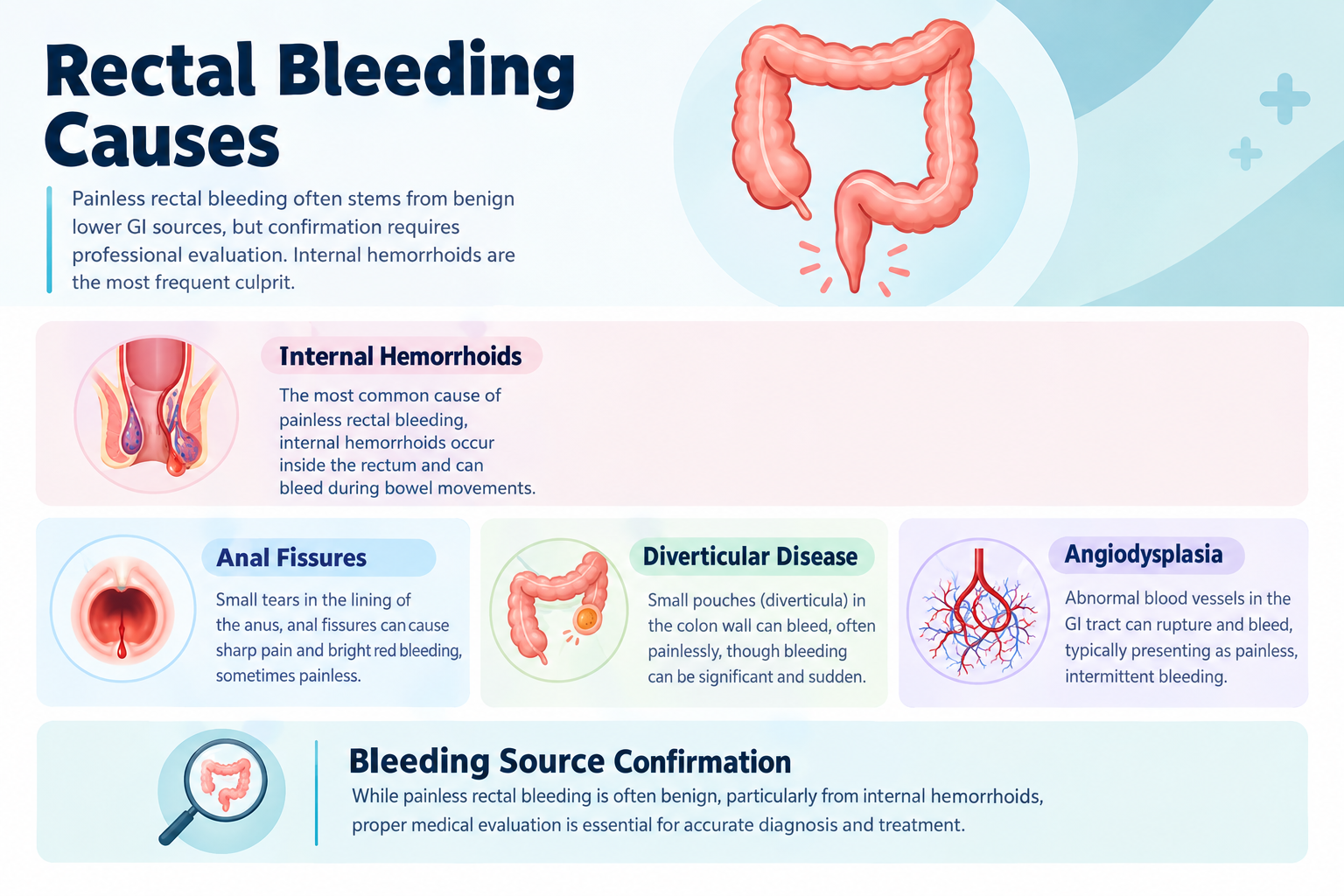
Bright red blood coating the stool usually points to the rectum or anal canal. Blood mixed throughout the stool points higher up and needs more urgent investigation. Laparoscopic and General Surgical Procedures
When Does Painless Rectal Bleeding Need Urgent Evaluation?
Certain features separate low-risk bleeding from bleeding that needs a prompt scope.
- Age Over 40: A first episode with no prior haemorrhoid history needs evaluation, not an assumption of piles.
- Bowel Habit Change: Blood plus a persistent change in frequency, stool consistency or a feeling of incomplete emptying needs same-week assessment.
- Weight Loss or Anaemia: Unexplained weight loss, fatigue or low haemoglobin alongside bleeding suggests chronic blood loss and needs urgent surgical assessment.
- Recurring Episodes: Bleeding that repeats over weeks shouldn’t be managed with dietary advice alone.
A colonoscopy doesn’t just find cancer, it finds and removes polyps before they become cancer, which is the actual value of investigating rectal bleeding early rather than assuming it’s just prolapsed piles and waiting for symptoms to escalate.
Why Choose Dr. Rajeev Premnath?
Dr. Rajeev Premnath has over 20 years of experience as a General and Laparoscopic Surgeon, holding MS (Gen Surg.), FRCS (Glasg), FEBS, FICS, FACS, FIAGES and FMAS, with international training at IRCAD France and the National University of Health, Singapore. He heads the Day Care Surgery Department at Ramakrishna Specialty Hospital, Bangalore, and evaluates and manages the full range of lower GI conditions from haemorrhoids and polyps to colorectal cancer with a structured diagnostic approach that doesn’t default to reassurance before ruling out serious pathology.
Patients who come with painless rectal bleeding get a proper evaluation, not a presumptive diagnosis. If the bleeding has a benign cause, that gets confirmed. If it doesn’t, the workup finds it early when surgical options are better and outcomes are significantly improved.
Noticed blood in your stool but no pain and putting off getting it checked?
FAQs
Is painless blood in stool always due to piles?
No, polyps, diverticular disease and colorectal cancer can all cause painless rectal bleeding without any discomfort.
At what age should rectal bleeding be investigated with colonoscopy?
Any first episode of rectal bleeding in a patient over 40 warrants colonoscopy rather than empirical management.
Can blood in stool stop on its own and still need investigation?
Yes, bleeding that resolves on its own can still indicate a polyp or early cancer that needs to be found and treated.
What does dark red versus bright red blood in stool mean?
Bright red blood usually indicates a lower rectal or anal source; dark red or maroon blood suggests bleeding higher in the colon.