

Gallstones in pregnancy are more common than most patients expect. Asymptomatic cases don’t require immediate intervention. Symptomatic gallstones causing biliary colic, cholecystitis, or pancreatitis are a different matter, as repeated attacks carry real complications. When intervention is indicated, laparoscopic cholecystectomy in the second trimester is considered safe and preferred over repeated hospitalisation or emergency surgery later in pregnancy.
According to Dr. Rajeev Premnath, General and Laparoscopic Surgeon in Bangalore, “Symptomatic gallstones in pregnancy that keep recurring aren’t a problem to defer the risk of pancreatitis or cholecystitis in the third trimester creates a far more difficult surgical and obstetric situation than a planned second trimester laparoscopy does.”
Why Are Gallstones More Common During Pregnancy?
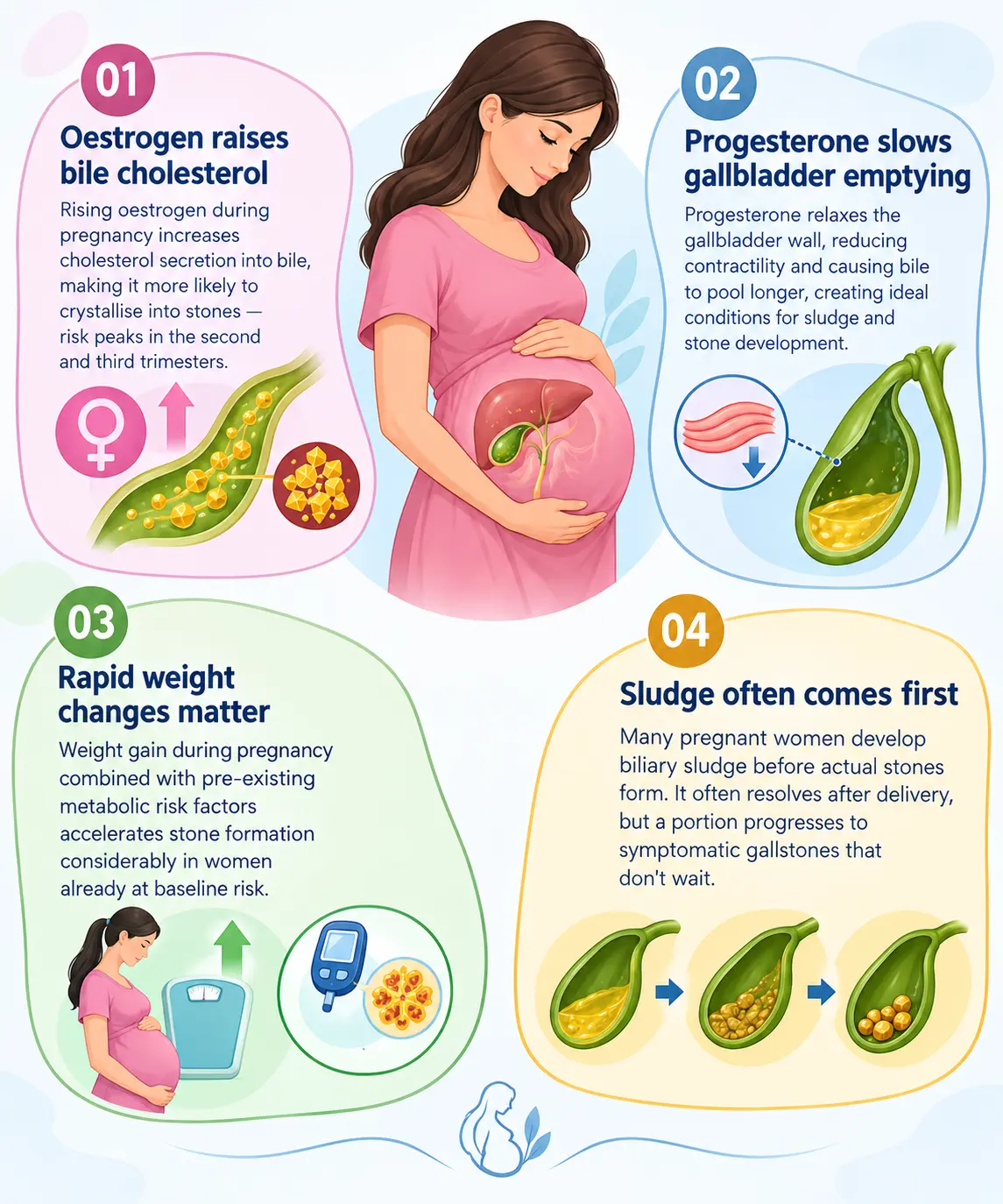
Recognising the signs of gallstone symptoms early is especially critical during pregnancy, when upper abdominal pain is often mistaken for other conditions and the diagnosis gets delayed.
When Is Surgery Safe and What Are the Non-Surgical Options?
Treatment depends on trimester, symptom severity and whether complications like cholecystitis or pancreatitis are already present.
- First trimester: conservative where possible: Surgery carries the highest miscarriage risk during organogenesis, so symptomatic cases are managed with low-fat diet, hydration and pain relief while monitoring closely for escalation.
- The second trimester is the surgical window: Weeks 13 to 28 offer the safest period for laparoscopic cholecystectomy; the uterus isn’t yet large enough to obstruct access and the risk of preterm labour from surgery is at its lowest.
- Third-trimester surgical risk rises: Operating laparoscopically becomes technically harder as the uterus fills the abdominal cavity. Most surgeons prefer conservative management and plan surgery after delivery unless an emergency forces the decision.
- Complications change everything: Gallstone pancreatitis or acute cholecystitis during pregnancy requires prompt surgery regardless of trimester. Delaying in a complicated case consistently outweighs the operative risk at any stage.
Leaving symptomatic gallstones untreated through pregnancy isn’t without cost. Understanding what happens when gallstones go unmanaged helps patients weigh watchful waiting against timely intervention more clearly.
Why Choose Dr. Rajeev Premnath?
Dr. Rajeev Premnath has over 20 years of experience as a General and Laparoscopic Surgeon, holding MS (Gen Surg.), FRCS (Glasg), FEBS, FICS, FACS, FIAGES and FMAS, with international training at IRCAD France and the National University of Health, Singapore. He heads the Day Care Surgery Department at Ramakrishna Specialty Hospital, Bangalore, and has performed hundreds of laparoscopic cholecystectomies including complex cases requiring careful pre-operative planning around patient risk factors.
Gallstone cases in pregnancy need a surgeon who understands both the operative and the obstetric picture. The question isn’t just whether surgery is technically possible it’s whether the timing is right, the risk is justified and the patient understands both paths clearly. That’s the conversation here.
Experiencing recurring upper abdominal pain during pregnancy and unsure whether it’s gallstone-related?
FAQs
Can gallstones be removed safely during pregnancy?
Yes, laparoscopic cholecystectomy in the second trimester is considered safe for symptomatic gallstones.
What trimester is safest for gallbladder surgery in pregnancy?
The second trimester, between weeks 13 and 28, carries the lowest surgical and obstetric risk.
Can gallstones during pregnancy harm the baby?
Untreated complications like pancreatitis or cholecystitis pose greater risk to the foetus than a planned surgery does.
Do pregnancy gallstones go away after delivery?
Biliary sludge often resolves postpartum but symptomatic gallstones typically don’t and usually need surgery after delivery.