

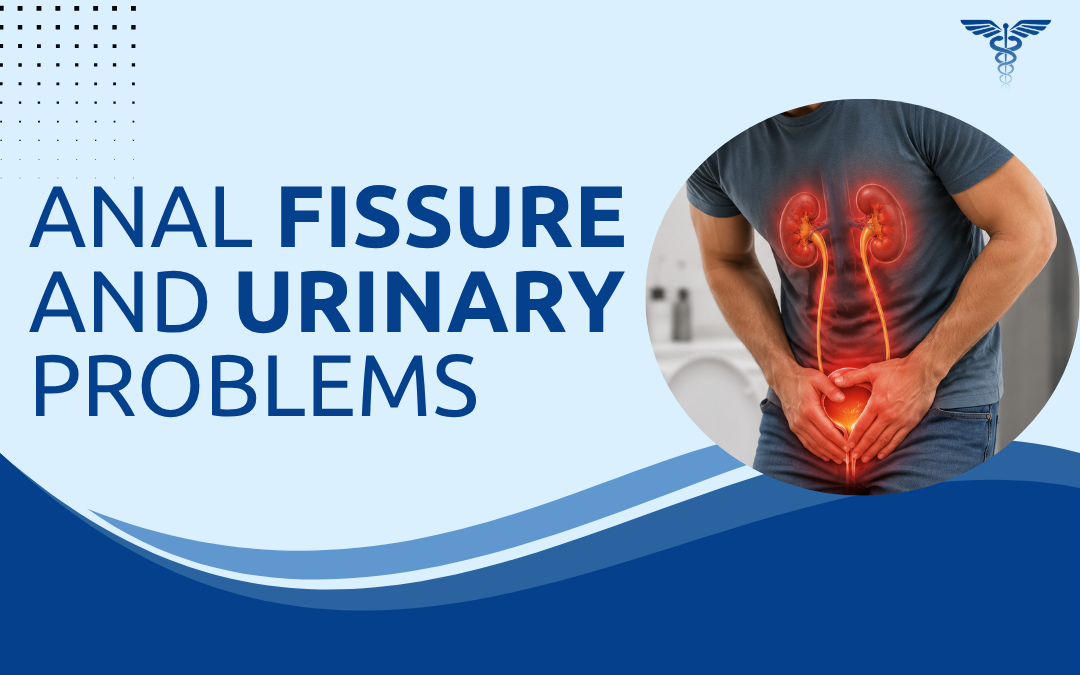
Fissure pain and urinary difficulty are linked through shared pelvic floor innervation. Severe perianal pain triggers generalised pelvic floor spasm, which compresses the urethra and restricts urinary flow. Hesitancy, incomplete voiding, difficulty initiating. All secondary to pain. Treat the fissure and they resolve without any urological intervention needed.
According to Dr. Rajeev Premnath, a trusted piles specialist in Bangalore, Patients with severe fissure pain sometimes present with urinary difficulty and assume something is wrong with their bladder. It’s the pelvic floor responding to pain, not a urological problem. Controlling the fissure pain is what fixes it.
Why Does an Anal Fissure Affect Urination?
The pelvic floor is the shared anatomical link. Pain in one structure affects everything it supports.
- Shared innervation: The pudendal nerve supplies both the external anal and urethral sphincters. Intense fissure pain activates this pathway, producing reflex spasm that disrupts urethral function as a secondary consequence.
- Pelvic floor spasm: Severe fissure pain contracts the entire pelvic floor protectively. That contraction compresses the urethra from outside and increases resistance to urinary flow. Nothing is structurally obstructing. The spasm is the obstruction.
- Pain-avoidance behaviour amplifies it. Patients tense the entire pelvic floor anticipating defaecation pain. That tensing restricts urinary flow too. In severe cases it becomes habitual, which is why urinary symptoms sometimes persist between bowel movement episodes.
- Post-defaecation spasm peak: Urinary difficulty is worst in the thirty to sixty minutes after a bowel movement when sphincter spasm peaks. Patients can’t pass urine comfortably in that window even with a full bladder.
Urinary symptoms that resolve with fissure pain control don’t need separate investigation. Persistent symptoms do. A proper evaluation for fissure treatment addresses the source directly.
When Do Urinary Symptoms Need Further Investigation?
Urinary symptoms tied to a fissure typically disappear once the fissure is treated. When they don’t, something else is driving them.
- Symptoms persisting after treatment: Hesitancy or incomplete voiding continuing after the fissure has healed suggests an independent urological condition. Bladder outlet obstruction or urethral stricture won’t improve with fissure treatment alone.
- Blood in urine: Haematuria has nothing to do with fissure pathology. Needs urgent urological assessment regardless of whether a fissure is present. Don’t attribute it to pelvic floor spasm.
- Fever with urinary symptoms: Fever alongside urinary difficulty and perianal pain suggests a perianal abscess or perineal infection. Needs urgent clinical assessment, not a UTI prescription.
- Worsening over time: Urinary symptoms are getting worse rather than correlating with pain intensity, and need investigation. Progressive voiding difficulty in men over fifty points toward prostatic pathology requiring its own assessment.
Urinary symptoms that don’t correlate with fissure pain deserve proper investigation. Our previous blog on chronic fissures covers all treatment options when conservative management hasn’t resolved the fissure.
Why Choose Dr. Rajeev Premnath?
Dr. Rajeev Premnath is a General and Laparoscopic Surgeon with MBBS, MS (Gen Surg.), FRCS (Glasg.), FEBS, FICS, FACS, FIAGES, FMAS, and a Diploma in Laparoscopy from France. He’s been managing acute, chronic, and complex fissure presentations at Ramakrishna Super Speciality Hospital for over 20 years, including cases where secondary symptoms like urinary difficulty are misattributed to separate conditions before the fissure is properly assessed and treated.
Fissure cases here get assessed for secondary symptoms as part of the initial consultation. Secondary urinary difficulty from fissure pain gets identified and addressed at the source, not referred elsewhere unnecessarily.
Fissure pain after every bowel movement is now causing difficulty passing urine?
FAQs
Can an anal fissure cause urinary problems?
Yes. Severe fissure pain triggers pelvic floor spasm that compresses the urethral sphincter, causing hesitancy or incomplete voiding.
Why does an anal fissure affect urination?
The pudendal nerve supplies both the anal and urethral sphincters. Fissure pain activates reflex spasm that restricts urinary flow.
Do urinary symptoms from a fissure resolve after treatment?
Yes. Once fissure pain is controlled or the fissure heals, pelvic floor spasm resolves and urinary symptoms disappear.
When should urinary symptoms alongside a fissure be investigated further?
When they persist after fissure treatment, include blood in urine, or worsen rather than correlate with fissure pain intensity.
Disclaimer:
This blog is for educational and informational purposes only and should not be considered professional advice.