

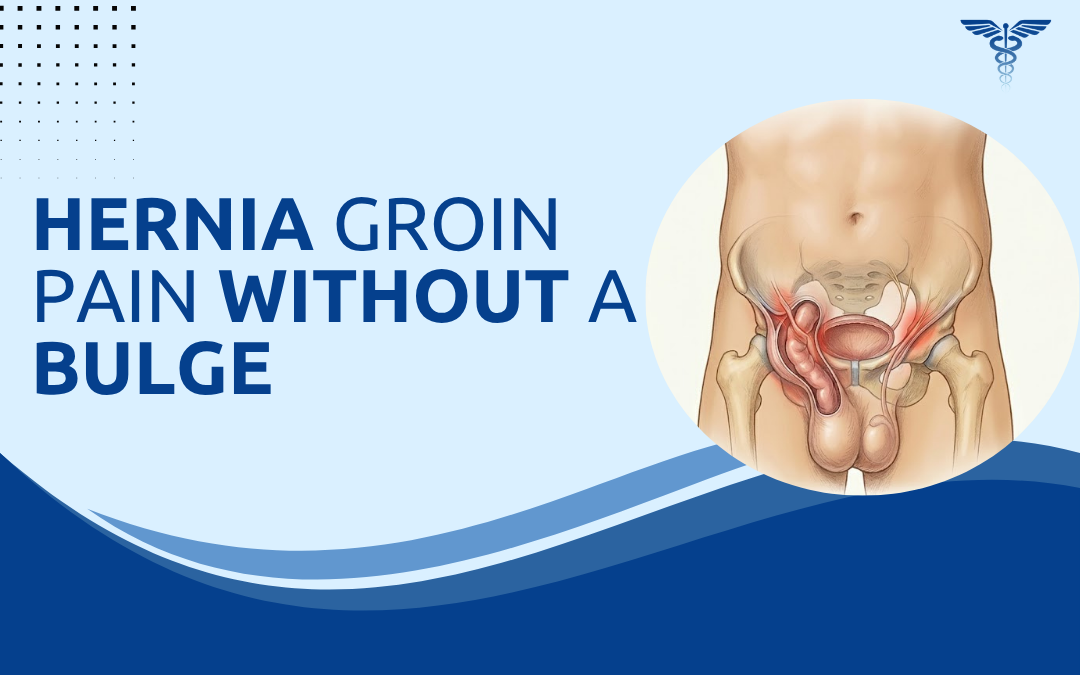
An inguinal hernia doesn’t need a visible bulge to cause groin pain. Occult hernias create mechanical stress on surrounding tissue without any external protrusion. Pain worsens with activity and settles with rest. Many patients manage it as a muscle strain for months. One proper examination changes the diagnosis entirely.
According to Dr. Rajeev Premnath, a trusted Hernia Specialist in Bangalore, “Groin pain without a bulge gets misdiagnosed more often than most people realise. The hernia is there. It just hasn’t pushed through far enough to show yet. One proper clinical examination and a dynamic ultrasound is usually all it takes to find it.”
Why Does a Hernia Cause Pain Before a Bulge Appears?
No visible bulge doesn’t mean no hernia. That assumption is what keeps these cases mismanaged for months before anyone examines properly.
- Occult hernia: A defect in the posterior inguinal wall pulls on the surrounding peritoneum with every movement. Nothing protrudes externally. Clinical examination comes back normal. The pain is real regardless.
- Peritoneal traction: What patients describe as a dragging sensation is the peritoneal lining being pulled at the defect site. Worse on standing, better on lying flat. That positional pattern is what separates it from a muscle strain.
- Nerve involvement: The ilioinguinal and genitofemoral nerves pass directly through this region. When the hernia defect compresses or stretches them, pain refers into the inner thigh or scrotum rather than sitting locally in the groin.
- Intermittent herniation: The hernia only pushes through during coughing, straining, or prolonged standing, then drops back. Self-examination at rest finds nothing. The pain history is the only clue.
Dynamic ultrasound during straining catches what resting examination misses entirely. A clinical assessment for hernia surgery is the right first step when groin pain has no other clear explanation.
What Other Conditions Mimic Hernia Groin Pain Without a Bulge?
Several conditions land in the same region with the same symptoms. Getting this wrong means treating the wrong problem for months.
- Sports hernia: Posterior inguinal wall disruption without a true fascial defect produces chronic activity-related groin pain that’s clinically identical to an occult hernia. Common in athletes, consistently missed without dedicated imaging.
- Hip pathology: Labral tears, femoroacetabular impingement, and early hip osteoarthritis refer pain directly into the groin. Hip pathology and inguinal hernia coexist more often than expected, which is why both regions sometimes need imaging before a confident diagnosis is made.
- Lymph node enlargement: Inguinal lymphadenopathy produces a groin lump and tenderness that patients mistake for a hernia on self-examination. One ultrasound resolves it immediately but the anxiety beforehand is real.
- Nerve entrapment: Ilioinguinal nerve entrapment after previous abdominal or hernia surgery produces persistent groin pain with no hernia present. The treatment pathway is entirely different and hernia repair won’t fix it.
Misdiagnosis goes both ways here. Our previous blog on inguinal hernia covers when surgery is the right call and when careful monitoring is still appropriate.
Why Choose Dr. Rajeev Premnath?
Dr. Rajeev Premnath is a General and Laparoscopic Surgeon with MBBS, MS (Gen Surg.), FRCS (Glasg.), FEBS, FICS, FACS, FIAGES, FMAS, and a Diploma in Laparoscopy from France. He’s been managing inguinal hernias including occult and atypical presentations at Ramakrishna Super Speciality Hospital for over 20 years, with dynamic ultrasound assessment as a standard step when clinical examination alone doesn’t explain the pain.
Groin pain cases here get properly investigated before any operative decision is made. A diagnosis based on symptoms alone without imaging isn’t how surgical decisions get taken at this practice.
Persistent groin pain or dragging with no visible bulge?
FAQs
Can a hernia cause groin pain without a visible bulge?
Yes. Early and occult inguinal hernias cause groin pain and dragging without producing any external swelling.
How is a hernia diagnosed when there is no visible bulge?
Dynamic ultrasound during coughing or straining is the primary tool. MRI is used when ultrasound is inconclusive.
What other conditions cause groin pain similar to a hernia?
Sports hernia, hip pathology, lymph node enlargement, and nerve entrapment all produce groin pain without a bulge.
Does a hernia without a bulge still need surgery?
An occult hernia causing significant activity-limiting pain usually needs repair. Asymptomatic ones may be monitored.
Disclaimer:
This blog is for educational and informational purposes only and should not be considered professional advice.