

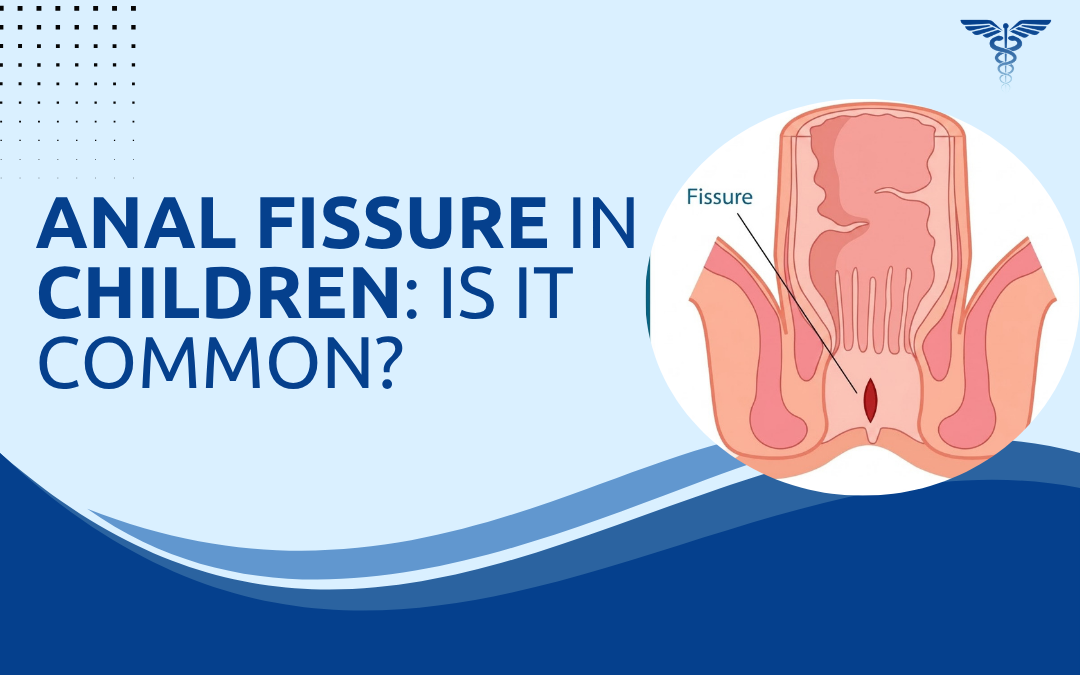
Anal fissures rank among the most frequently seen anorectal problems in infants and toddlers. Nearly always caused by constipation or passage of hard stools, they present as a small tear in the anal mucosa with bleeding and pain on defaecation. Most don’t need surgery. Dietary correction and stool softeners resolve the majority of cases within a few weeks, provided the pain-retention cycle doesn’t get a chance to take hold. Blood on the nappy, crying at stool time, and deliberate withholding are the typical signs parents notice first.
According to Dr. Rajeev Premnath, a trusted piles specialist in Bangalore, Children with fissures are almost always managed without surgery. The priority is correcting stool consistency and breaking the pain-retention cycle before the fissure has any chance to become chronic.
Why Do Anal Fissures Occur in Children?
Most cases trace back to one problem: stool that’s too hard or too large for the anal canal to accommodate without tearing.
- Constipation: Hard, large-calibre stools stretch the anal mucosa beyond what it can handle, causing a tear at the posterior or anterior midline. It’s the single most common trigger in children of every age group.
- The pain-retention cycle is where things get worse. Once passing stool hurts, children hold it in. The longer stool sits, the harder it gets. Harder stool causes more tearing at the next attempt, and the cycle just keeps going without active intervention.
- Dietary factors: Low fibre and poor fluid intake are the most correctable contributors. Children switching from formula to solids or going through food fads are especially prone to stool hardening during these dietary transitions.
- Cow’s milk sensitivity: A subset of infants with recurrent fissures don’t respond adequately to standard dietary correction. Cow’s milk protein intolerance is worth investigating when fissures keep returning despite proper hydration and fibre.
Symptoms persisting beyond two weeks need proper clinical evaluation. A referral for fissure treatment at that stage prevents the acute tear from becoming a chronic, treatment-resistant problem.
What Treatment Options Are Available for Children?
Surgery is rarely on the table for paediatric fissures. Conservative management works in the vast majority of cases when started early and applied consistently.
- Dietary modification: More fibre, more fluids, age-appropriate food choices. This alone resolves a large proportion of paediatric fissures within two to four weeks, without any prescription needed.
- Warm sitz baths for ten to fifteen minutes after each bowel movement reduce perianal spasm and improve blood flow to the wound. Parents skip this one often, which is a shame because the symptomatic relief is consistent and the effort involved is minimal.
- Stool softeners: Lactulose and polyethylene glycol keep stool soft through the healing phase. Well tolerated in children, they reduce the mechanical stress on the fissure with every bowel movement until the mucosa repairs itself.
- Topical agents: Barrier ointments limit further mucosal trauma and ease the pain enough that the child stops fearing the toilet. Topical nitrates are added in older children when healing hasn’t progressed after a reasonable trial of conservative measures.
Lateral internal sphincterotomy is reserved for truly chronic, treatment-resistant cases only. For a full overview of what that stage looks like and what interventions apply, our previous blog on chronic fissure covers all five standard treatment options.
Why Choose Dr. Rajeev Premnath?
Dr. Rajeev Premnath holds MBBS, MS (Gen Surg.), FRCS (Glasg), FEBS, FICS, FACS, FIAGES, FMAS, and a Diploma in Laparoscopy from France. He’s been managing both paediatric and adult anorectal presentations at Ramakrishna Super Speciality Hospital for over 20 years, with structured protocols that match treatment intensity to the actual stage rather than defaulting to procedures when simpler options haven’t been properly tried.
Paediatric fissures are assessed thoroughly before any intervention is recommended. The least invasive option that fits the clinical picture gets applied first, every time.
Child refusing to use the toilet or showing distress at every bowel movement?
FAQs
Are anal fissures common in children?
Yes, among the most common anorectal conditions in infants and young children, almost always due to constipation.
How is a fissure treated in children?
Dietary changes, stool softeners, and topical ointments resolve most cases. Surgery is rarely needed.
When should a child see a doctor for a fissure?
If symptoms don’t improve within two weeks or bleeding continues, a clinical evaluation is needed.
Can diet prevent fissures in children?
High-fibre food and adequate fluids reduce constipation and straining, the main drivers in children.
Disclaimer:
This blog is for educational and informational purposes only and should not be considered professional advice.