

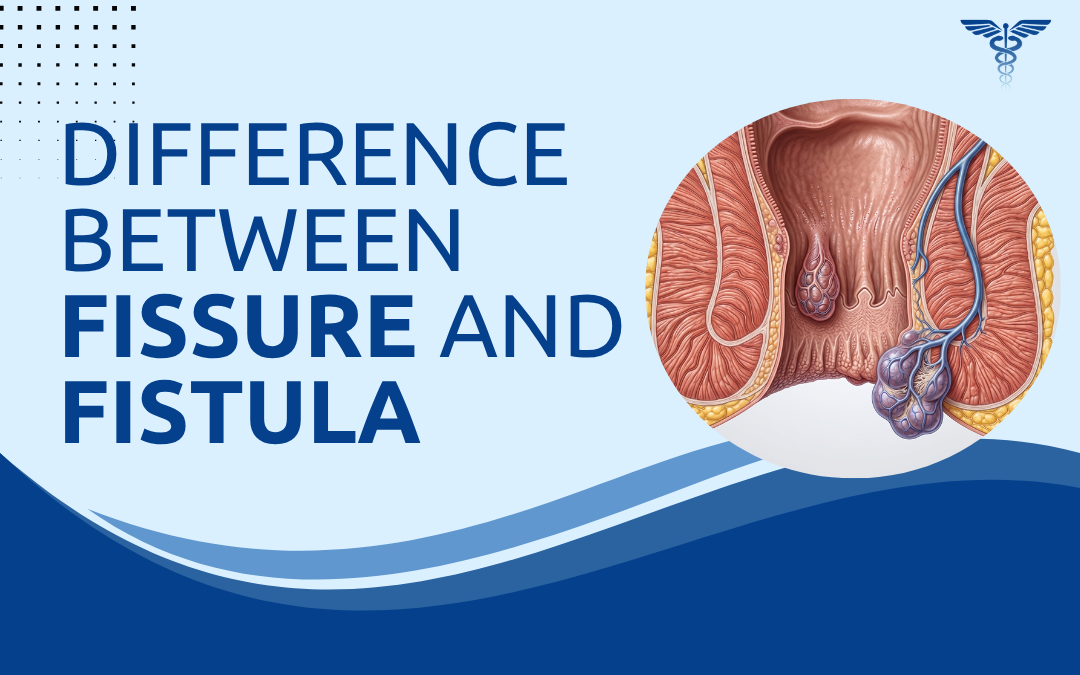
An anal fissure is a small tear or crack in the lining of the anal canal that causes sharp cutting pain and bright red bleeding during bowel movements. An anal fistula is an abnormal tunnel forming between the inside of the anal canal and the skin near the anus, causing persistent pus drainage, perianal swelling and chronic dull throbbing pain. Fissures result from mechanical trauma like hard stools. Fistulas develop after a perianal abscess ruptures and leaves an open tract behind. Same region, completely different conditions.
According to Dr. Rajeev Premnath, Proctologist in Bangalore, Patients mix these two up constantly because both involve anal pain, but the underlying cause and the treatment pathway have nothing in common.
How Does a Fissure Differ From a Fistula in Structure and Cause?
These are two fundamentally different types of tissue damage even though they affect the same anatomical area.
- Surface tear: A fissure is a shallow split in the anal mucosa usually along the posterior midline, caused by large or hard stools forcing through the anal canal during straining.
- Deep tract: A fistula is a tunnel that burrows through muscle and soft tissue connecting an infected anal gland inside to an external skin opening, and it won’t close because the tract lining keeps it permanently open.
- Abscess link: Fissures have nothing to do with infection but nearly every fistula traces back to a perianal abscess that burst, drained and left behind a passage that never sealed.
- Healing path: Acute fissures close within four to six weeks with dietary changes and topical creams while fistulas almost never shut on their own and need surgical intervention to eliminate the tract.
Early fissures respond well to conservative care including sitz baths, fibre and medication. Learn more about fissure treatment options that work without surgery.
What Symptoms Help Tell a Fissure Apart From a Fistula?
Pain quality and the type of discharge are the clearest clinical differentiators between these two conditions.
- Pain character: Fissure pain is sharp, cutting and worst during or immediately after passing stools then slowly fades over the next hour, sometimes with a burning aftereffect that lingers.
- Drainage: Fistulas leak pus, blood-tinged fluid or mucus from a visible pinhole opening near the anus and that fistula treatment becomes necessary because the drainage cycle doesn’t stop on its own.
- Blood pattern: Bright red streaks on toilet paper or stool surface point toward fissure while fistula discharge is mixed, often foul-smelling and looks nothing like clean rectal bleeding.
- Lump cycle: A soft perianal swelling that fills up, drains spontaneously, flattens for a few days and then swells right back up again is the signature pattern of an active fistula tract.
And that recurring swell-drain-repeat cycle is the part most patients ignore for months. Understand how anal fistula develops and why delaying rarely helps.
Why Choose Dr. Rajeev Premnath?
Dr. Rajeev Premnath brings over 20 years of surgical experience treating anorectal conditions and performed Karnataka’s first VAAFT surgery for complex anal fistula. He holds FRCS (Glasgow), FEBS, FACS and advanced training in minimally invasive proctology from IRCAD France and NUH Singapore.
Patients who’ve already been through failed fistula surgeries elsewhere are the ones who typically end up in his clinic. Most of them don’t need a third operation after that.
Persistent anal pain, bleeding or discharge that won’t resolve on its own?
FAQs
Is a fissure more painful than a fistula?
Fissures cause sharper intense pain during bowel movements than fistulas usually do.
Can an anal fissure become a fistula over time?
A fissure doesn’t directly convert into a fistula but both can coexist together.
Do anal fistulas heal without surgery?
Most fistulas need surgery because the open tract won’t close on its own.
Which condition causes pus discharge near the anus?
Anal fistula causes persistent pus or fluid drainage from a perianal opening.