

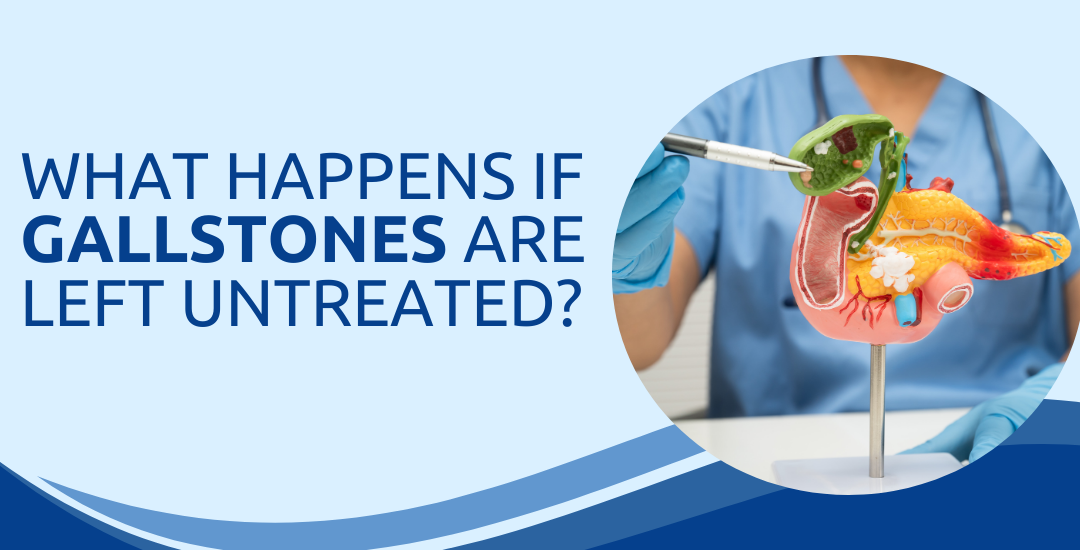
Here’s the thing about gallstones. They don’t wait. They don’t stay mild forever. They block ducts, inflame organs and quietly turn into something genuinely nasty while most people are still blaming last night’s dinner. Months go by. Sometimes years. And the whole time it’s getting worse not better. That’s just what happens.
“Gallstones don’t resolve on their own. The longer they’re ignored the more complicated the situation becomes,” says Dr. Rajeev Premnath, General Surgeon in Bangalore.
What Complications Come From Untreated Gallstones?
Most people only find out about these complications after they’re already dealing with one. Gallbladder stone removal done early is straightforward. Done late it’s a completely different situation.
- Cholecystitis. Stone blocks the gallbladder outlet, the whole thing inflames badly, fever hits, pain gets brutal and what could’ve been a calm planned procedure becomes a stressful emergency instead.
- Pancreatitis. Stones that slip into the bile duct sometimes block the pancreatic duct too and that triggers severe inflammation that gets people rushed to hospital before they even understand what’s happening.
- Bile duct blockage. One stone stuck in the wrong place brings jaundice, dark urine and an infection that spreads fast and gets genuinely dangerous if it doesn’t get sorted out quickly.
- Gallbladder rupture. Worst case the whole thing ruptures, bile spills into the abdomen and what started as a small stone nobody wanted to deal with becomes a life threatening situation.
Early and simple versus late and complicated. That’s really what it comes down to. Nothing else creates that gap except time spent waiting.
Patients with that recurring upper right pain or that heavy awful feeling after meals should really look at mini laparoscopy for gallstones before things get any further along.
What Early Signs Do People Keep Brushing Off?
So many people sit on these for months. Some for years. And every single week spent ignoring them is another week the problem uses to grow into something harder to fix.
- Upper abdominal pain. That nagging ache in the upper right side after eating gets called acidity, gets called stress, gets called everything except what it actually is for way too long.
- Nausea and bloating. Feeling sick and bloated after meals isn’t always just bad digestion and most people just quietly stop eating certain foods instead of actually finding out what’s going on.
- Shoulder or back pain. Pain that shoots toward the right shoulder or sits between the shoulder blades during an episode is textbook gallstone behaviour and almost everyone blames their posture or their chair.
- Yellowing of skin or eyes. Any hint of jaundice means a stone has likely already moved into the bile duct and that needs same day attention, genuinely same day, not a call scheduled for next week.
These signs don’t fade with time. They get louder. And every day they’re dismissed is a day given to the problem to become something far nastier than it started as.
Still sitting on the fence about whether gallstones actually need treating or can just be watched, this older piece on do all gallbladder stones require removal answers that honestly without drowning anyone in medical language.
Why Choose Dr. Rajeev Premnath Gall Bladder Treatment?
Dr. Rajeev Premnath has spent over 20 years handling gallstone cases. Simple early ones. Complicated late ones. Full emergencies. Every day. Trained at IRCAD in France, genuinely one of the best places anywhere in the world for minimally invasive surgery training. Then added advanced SILS training in Singapore on top of that. Hundreds of real gallbladder cases. Patients going home same day. Recovering faster than they expected every single time.
FAQs
1. Can gallstones actually go away on their own?
No, they don’t dissolve without treatment and ignoring symptoms almost always leads to serious complications developing sooner or later.
2. How serious is leaving gallstones completely untreated?
Very serious, cholecystitis, pancreatitis, bile duct blockage and gallbladder rupture are all real outcomes of ignored gallstones.
3. Do gallstones without symptoms still need treatment?
Not always, but symptomatic gallstones always need a proper assessment before complications get a chance to develop.
4. What's the best treatment for gallstones today?
Laparoscopic gallbladder removal is the most effective widely used approach with low complication rates and fast recovery.
Reference links:
Disclaimer: The information shared in this content is for educational purposes and not for promotional use.