

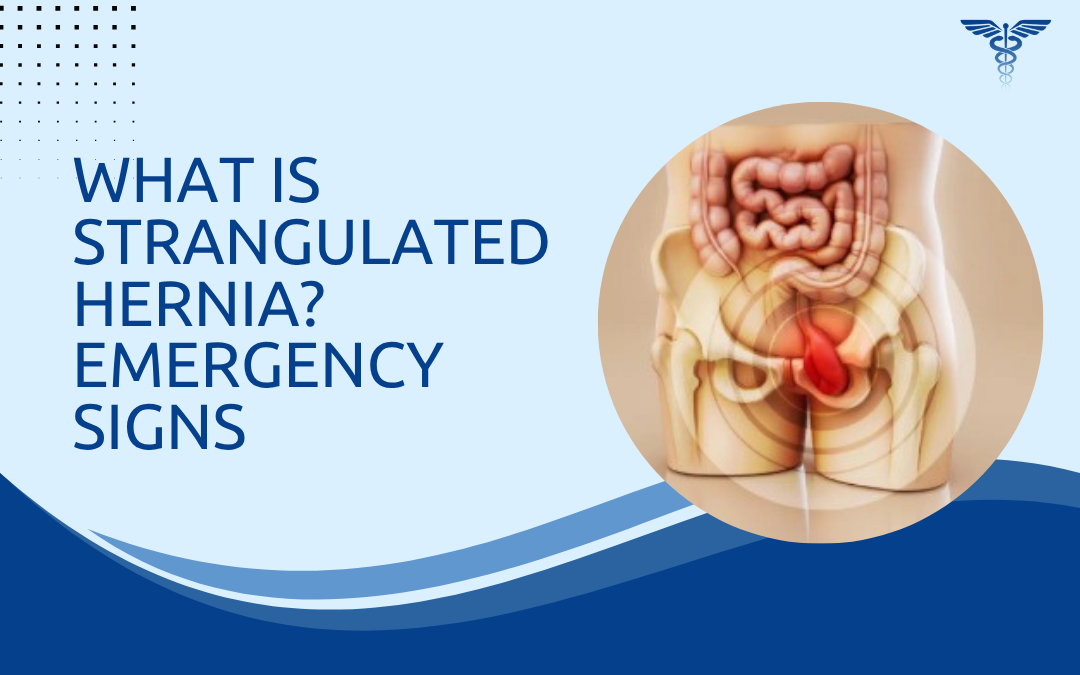
A strangulated hernia is when trapped tissue inside a hernia has its blood supply completely cut off. That’s the emergency. Not painful and uncomfortable. Actually losing blood supply. Tissue starts dying within hours and every hour spent at home waiting to see if things improve makes the surgical outcome significantly worse. Sudden severe pain, a hard stuck bulge, nausea, vomiting, skin going red or dark over the site. Hospital. Now. Not after a phone call. Now.
“A strangulated hernia is a surgical emergency and the outcome depends almost entirely on how quickly the patient reaches an experienced surgeon,” says Dr. Rajeev Premnath, General and Laparoscopic Surgeon.
This is one situation where waiting to see if things settle is genuinely the wrong call every single time.
What Actually Happens During Strangulation and How Did It Get There?
Most strangulated hernias don’t appear from nowhere. They start as an untreated hernia that slowly got worse. Hernia surgery done early as a planned procedure is a completely different thing from emergency surgery at midnight on a strangulated hernia. The gap between those two situations is built entirely by how long the original hernia got left alone.
- It starts with incarceration. Before strangulation comes incarceration where the hernia tissue gets stuck and can’t be pushed back. No blood supply issue yet. But the door to strangulation is now open and can’t be closed by lying down or waiting.
- Then blood supply cuts off. The trapped tissue swells inside a tight opening, the swelling compresses the blood vessels feeding it and once that blood supply is gone the tissue starts dying. Fast. Hours not days.
- Bowel can get involved. When bowel is the trapped tissue strangulation means a section of bowel is dying inside the hernia sac and that creates a life threatening infection risk on top of everything else already happening.
- The warning window is short. From first severe pain to needing emergency surgery the window is often six to twelve hours. People who sit on it assuming it’ll pass the way previous hernia discomfort did are the ones who end up with the worst outcomes.
An untreated hernia that gets comfortable to ignore is still a hernia sitting there with strangulation risk attached to it. That risk doesn’t go away. It just waits for the right conditions to become an emergency.
Patients who’ve been sitting on a hernia diagnosis and haven’t yet sorted repair should look at high risk inguinal hernia surgery which handles the more complex presentations including cases that have been left longer than they should.
What Are the Exact Emergency Signs of a Strangulated Hernia?
Knowing these isn’t optional for anyone with a known hernia. Because strangulation doesn’t send a polite warning. It hits hard and it hits fast and recognising it immediately is what changes the outcome.
- Sudden severe pain that won’t ease. Not the usual hernia discomfort. A sharp intense pain at the hernia site that keeps building without any relief and doesn’t respond to lying down, changing position or anything else tried at home.
- The bulge becomes hard and can’t be pushed back. A hernia that normally reduces with gentle pressure but suddenly feels firm, tender and completely stuck has moved from manageable to genuinely dangerous and needs immediate attention.
- Nausea and vomiting alongside the pain. This combination specifically means the bowel is likely involved and obstructed and that escalates everything into territory where the surgical clock is actively running down.
- Skin over the hernia changes colour. Redness spreading over the bulge, bruising appearing without injury or the skin going dark or purple means blood supply is already compromised and tissue is dying underneath right now.
None of these are wait-and-see signs. None of them. If even one of these is present the right move is hospital immediately. Not a call to see if an appointment is available. Not checking symptoms online for another hour. Hospital. Same minute.
Anyone wanting to understand where the line sits between a hernia that needs planned elective surgery and one that’s heading toward emergency territory should read this older piece on is it dangerous to delay hernia surgery which answers that directly without softening anything.
Why Choose Dr. Rajeev Premnath?
Dr. Rajeev Premnath has spent over 20 years handling hernia cases at every stage including strangulation emergencies. Planned day care repairs. High risk presentations. Midnight emergencies. Every single day. Trained at IRCAD in France, genuinely one of the most respected minimally invasive surgery institutions anywhere in the world. Advanced single incision laparoscopic training completed in Singapore on top of that. Hundreds of real hernia repairs. Patients who came in early going home same day. Outcomes that only happen when the right surgeon is ready.
Call Now: +91 90082 04466 – same day appointments available for urgent cases.
A hernia that hasn’t been fixed yet has strangulation risk attached to it every single day. One proper consultation sorts that before it becomes an emergency nobody planned for.
FAQs
Can a strangulated hernia resolve on its own without surgery?
No, strangulation never resolves on its own and every hour without surgical treatment increases tissue death, infection risk and surgical complexity significantly.
How quickly does a strangulated hernia become life threatening?
Tissue begins dying within hours of blood supply being cut off making strangulated hernias one of the fastest moving surgical emergencies in general surgery.
What is the difference between an incarcerated and strangulated hernia?
Incarceration means tissue is stuck and can’t be reduced while strangulation means blood supply to that stuck tissue has already been completely cut off.
Can a strangulated hernia happen to someone who had no previous hernia symptoms?
Yes, some hernias are silent until strangulation occurs which is why any sudden severe groin or abdominal pain with a hard bulge needs immediate hospital attention.
A proper consultation gives specific answers around your hernia size, type and health situation. Come in and speak directly with Dr. Rajeev Premnath.
References