

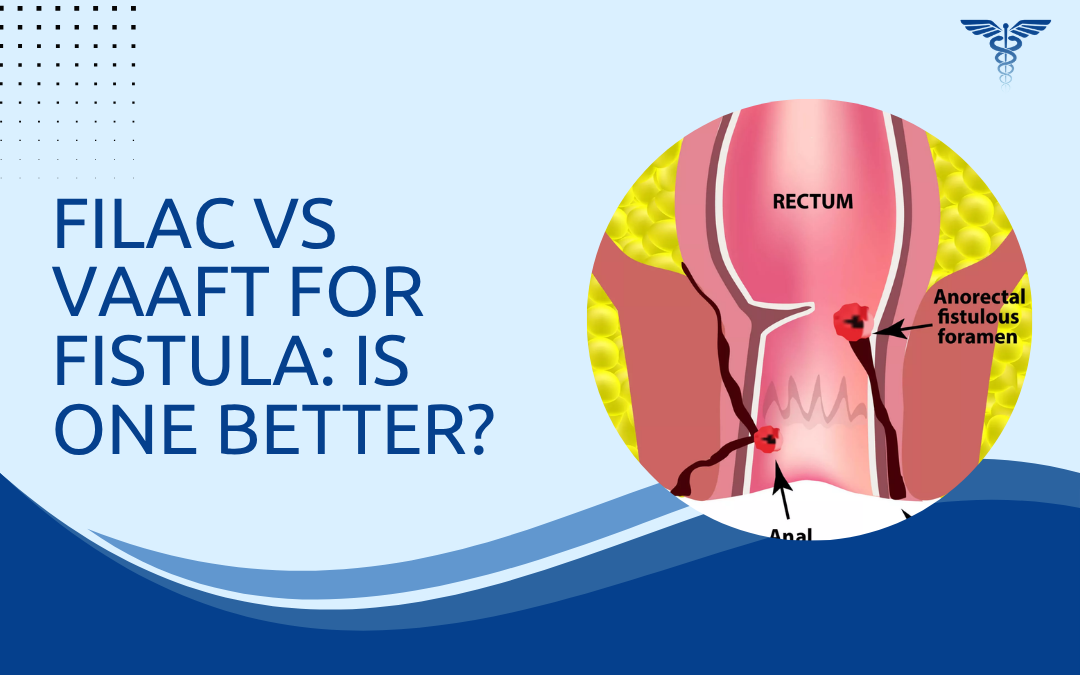
FiLaC uses a radial laser probe to obliterate the fistula tract from inside using thermal energy. VAAFT uses a miniature camera to visualise the tract internally, destroy the epithelium under direct vision and close the internal opening. Both are sphincter-preserving. Neither cuts muscle. Success rates for FiLaC range from 65% to 90%. VAAFT reports 73% to 87%. Neither is universally better. Tract anatomy, surgeon experience and patient factors determine which fits a specific case.
According to Dr. Rajeev Premnath, fistula treatment, “FiLaC and VAAFT are both excellent sphincter-saving options but choosing between them without proper MRI mapping of the tract first is just guessing and guessing in fistula surgery costs patients.”
Getting the tract properly mapped before any procedure decision is made changes outcomes more than which specific technique gets chosen on the day.
How Do FiLaC and VAAFT Actually Work Differently?
Both go inside the fistula tract. That’s where the similarity ends. The mechanism of action, the equipment used and what gets done to the tract internally are genuinely different between the two approaches.
- FiLaC mechanism. A radial laser probe gets inserted into the fistula tract through the external opening. Laser energy fires circumferentially as the probe withdraws, obliterating the tract epithelium from inside using controlled thermal damage without any direct cutting at all.
- VAAFT mechanism. A fistuloscope, which is a miniature rigid endoscope with its own light source, enters the tract through the external opening. The surgeon sees the tract interior in real time on a screen, destroys the epithelium under direct vision using electrocautery and identifies the internal opening precisely before closing it.
- Key difference in visibility. FiLaC works blind. The laser fires along the tract based on probe position without direct visualisation of what it’s obliterating. VAAFT gives real-time internal view which helps identify secondary tracts, debris pockets and the internal opening location that imaging sometimes misses.
- What stays the same. Both close the internal opening as a separate step after tract treatment. Both preserve the sphincter completely. Both are done under general or spinal anaesthesia as day care procedures. Both need mature fibrotic tracts for best results and both fail more often in active infection.
Most patients go home the same day after either procedure. External wound healing takes four to eight weeks. Neither procedure is appropriate for horseshoe fistulas or active sepsis without prior drainage first.
Patients wanting to understand all sphincter-saving options including LIFT as a third alternative should look at the full fistula treatment page which covers every approach honestly based on tract complexity.
Which Procedure Has Better Outcomes and Which Suits Which Patient?
VAAFT’s real advantage is the visualisation. Secondary tracts that FiLaC misses because it fires blind get identified and treated under direct VAAFT vision. For complex branching fistulas that distinction genuinely matters.Neither wins on every metric. The honest answer is that both are valid options and the right choice comes down to what the MRI shows and what the surgeon’s hands have done more of. Here’s the comparison.
|
FiLaC |
VAAFT |
|
|
Mechanism |
Radial laser obliteration of tract |
Direct endoscopic visualisation and electrocautery |
|
Visualisation |
Blind, no internal view |
Real-time internal view of tract |
|
Success rate |
65% to 90% |
73% to 87% |
|
Best for |
Simple single-tract trans-sphincteric fistulas |
Complex tracts, branching, uncertain internal opening location |
|
Secondary tracts |
May be missed without direct view |
Identified and treated under direct vision |
|
Recovery |
Same day discharge, 4-8 weeks wound healing |
Same day discharge, 4-8 weeks wound healing |
|
If it fails |
Sphincter intact, repeat or LIFT still available |
Sphincter intact, repeat or LIFT still available |
Still unsure about the difference between simple and complex fistula presentations and what treatment each needs, this older piece on complex fistula covers that distinction practically without overcomplicating the explanation.
Why Choose Dr. Rajeev Premnath?
Dr. Rajeev Premnath is a General and Laparoscopic Surgeon with over 20 years treating complex anal fistulas including trans-sphincteric cases requiring FiLaC, VAAFT and LIFT. MBBS, MS General Surgery, FRCS Glasgow, trained at IRCAD France. Advanced laser and proctology training completed. Head of Day Care Surgery, Ramakrishna Group of Hospitals.
Patients who get MRI mapping and proper procedure matching before surgery get the right operation for their specific tract. Those who get a laser procedure because it sounds modern without checking the anatomy come back with the same fistula and fewer remaining options.
Call +91 90082 04466 to book your consultation.
FAQs
What does FiLaC stand for in fistula surgery?
FiLaC stands for Fistula Laser Closure, a sphincter-preserving procedure using radial laser energy to obliterate the fistula tract internally.
Is VAAFT better than FiLaC for complex fistulas with multiple tracts?
VAAFT is generally preferred for complex tracts because direct endoscopic visualisation identifies secondary branches that FiLaC can miss firing blind.
Do both FiLaC and VAAFT preserve the sphincter completely?
Yes, neither procedure cuts any sphincter muscle making both suitable for high trans-sphincteric fistulas where fistulotomy would risk incontinence.
What happens if FiLaC or VAAFT fails and the fistula recurs?
The sphincter remains intact after both procedures so repeat treatment, LIFT or advancement flap are all still available options.