

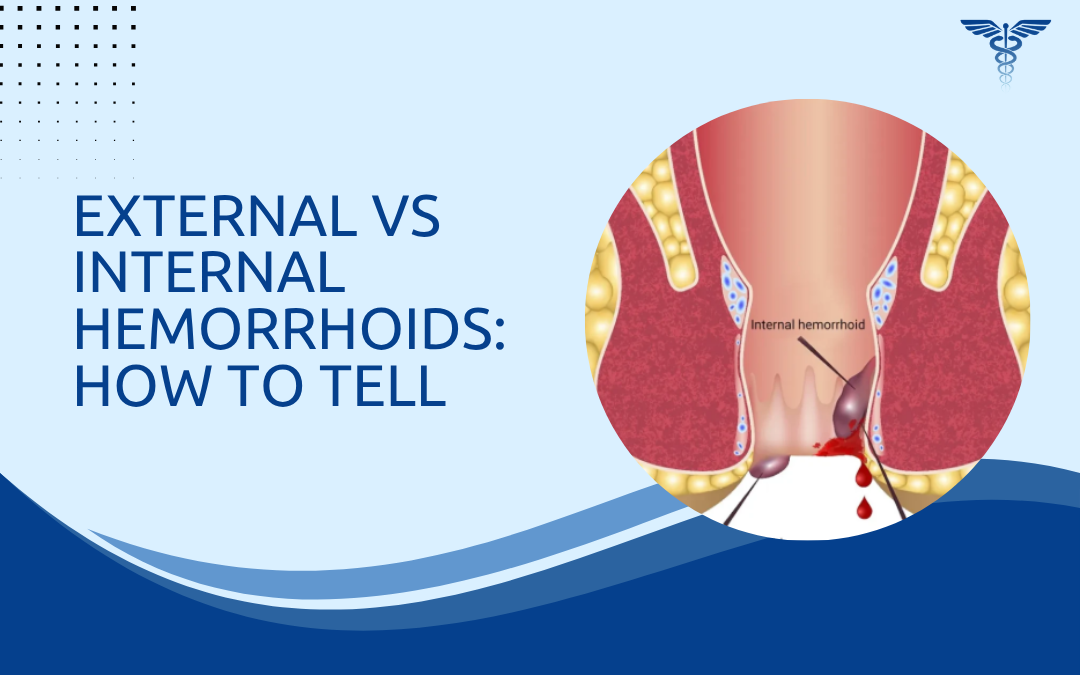
According to Dr. Rajeev Premnath, piles treatment, “Applying the wrong treatment to the wrong hemorrhoid type causes more harm than the original problem and that mistake happens far more often than it should.”
Five minutes with a proctologist confirms the type. Weeks of wrong treatment doesn’t.
What Symptoms Actually Tell the Two Types Apart?
Pain. External hemorrhoids cause intense pain, burning and discomfort when sitting, walking or passing stool because perianal skin has pain receptors. Internal ones are usually painless. The rectal mucosa above the dentate line simply doesn’t register pain the same way skin does.
What they feel like. A hard tender lump felt around the edge of the anus is an external hemorrhoid. Internal hemorrhoids can’t be felt or seen from outside. Maybe a vague pressure after bowel movements. That’s it, unless prolapse has already happened.
Bleeding. Bright red blood on toilet paper or dripping into the pan is classic internal hemorrhoid behaviour. External hemorrhoids don’t usually bleed unless a thrombosis develops and the overlying skin breaks down from the pressure.
Thrombosis. When a blood clot forms inside an external hemorrhoid the result is sudden severe localised pain and a hard lump that looks bluish or purple. That’s a thrombosed external hemorrhoid. Needs assessment within seventy-two hours. Not next week.
See a doctor if bleeding is excessive, symptoms last longer than a week, pain is severe or bowel habits change. These symptoms overlap with other conditions that need their own separate diagnosis entirely.
Type confirmed properly means treatment matched properly. A proctologist examination takes under five minutes and changes everything about what happens next.
How Does Treatment Differ Between the Two Types?
External Hemorrhoids
Internal Hemorrhoids
Pain
Usually painful, worse sitting and walking
Usually painless unless prolapsed
Location
Outside anus, perianal skin
Inside rectum above dentate line
Bleeding
Uncommon, only if thrombosed
Bright red blood, primary symptom
Visible
Yes, palpable lump around anus
No, invisible unless prolapsed
Rubber band ligation
Never, causes severe pain
Yes, effective grade 2 and 3
Treatment
Sitz baths, topical, clot evacuation
Diet, ligation, laser, haemorrhoidectomy
Combined presentations at grade three or four need conventional haemorrhoidectomy. That’s the only approach that handles both internal and external components properly in one procedure. Nothing else covers both at once.
Not sure whether treatment is actually needed yet or whether conservative management is still worth trying, this piece on whether piles always need surgery gives an honest answer across every grade.
Why Choose Dr. Rajeev Premnath?
Patients who come in early get matched to the right treatment first time. Those who self-diagnose and guess the type come back later with a harder case than they walked in with.
Call +91 90082 04466 to book your consultation.