

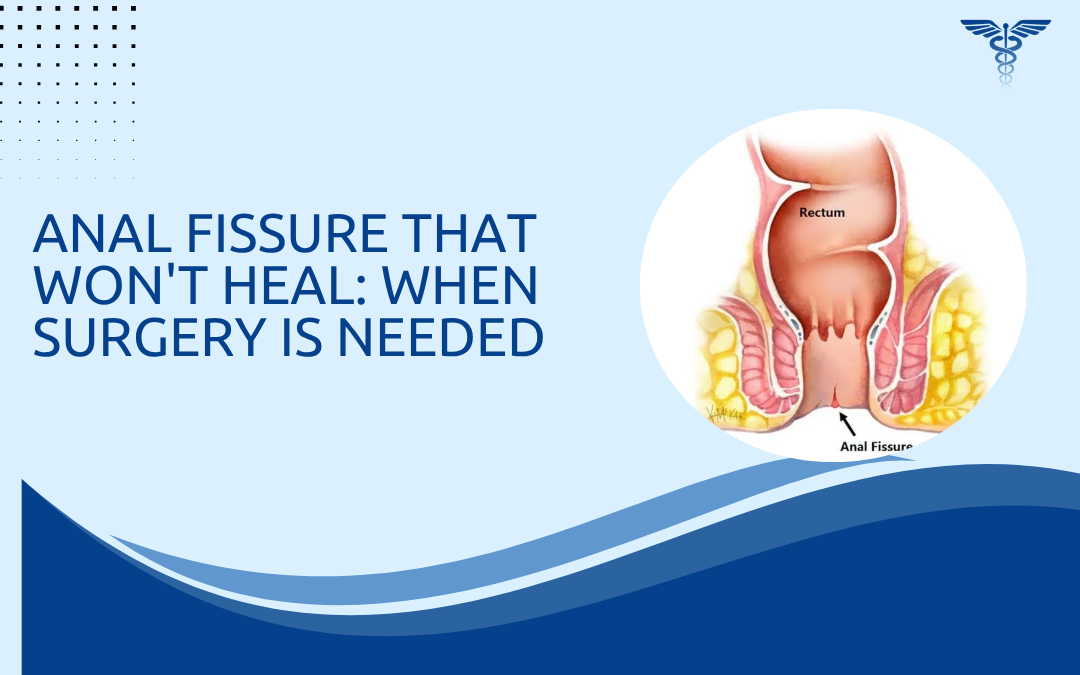
An anal fissure that hasn’t healed after eight weeks of proper medical treatment is a chronic fissure. Topical nitrates and calcium channel blockers heal roughly 50% to 70% of acute fissures. The ones that don’t respond have elevated internal sphincter tone that medication can’t adequately reduce. Surgery becomes the answer at that point. Specifically lateral internal sphincterotomy which heals chronic fissures in 90% to 95% of cases with a low recurrence rate.
According to Dr. Rajeev Premnath, renowned General and Laparoscopic Surgeon in Bangalore
“A fissure that hasn’t responded to eight weeks of topical treatment has given a clear answer about what it needs. LIS has a 90 to 95 percent healing rate and continuing medication beyond that point just delays the inevitable.”
Eight weeks is the threshold. Before it, medical management is appropriate. After it, continuing the same treatment that isn’t working is just postponing a conversation that needs to happen.
What Makes a Fissure Chronic and Why Won't It Heal Without Surgery?
Most acute fissures heal within a few weeks with dietary changes and topical medication. The ones that don’t have a specific physiological reason for failing to heal and that reason is what drives the surgical decision.
- Elevated sphincter tone. Chronic fissures almost always have raised internal anal sphincter pressure. The spasm reduces blood flow to the fissure edges preventing the tissue regeneration needed for healing. Topical medications reduce spasm temporarily but sustained healing requires permanently reducing that tone through surgical division.
- Fibrosis and scarring. A fissure that’s been present for weeks or months develops fibrotic edges and a sentinel pile at the distal end. Fibrotic fissure edges can’t regenerate and granulate the way fresh tissue does making medical healing increasingly unlikely the longer the fissure persists.
- Failed Botox injection. Botox injected into the internal sphincter temporarily reduces tone and heals 60% to 70% of chronic fissures. The ones that recur after Botox or fail to heal completely have persistent elevated tone that requires the permanent reduction only LIS provides.
- Atypical fissures. Fissures not in the posterior midline position, multiple fissures or fissures in patients with Crohn’s disease, HIV or tuberculosis don’t behave like standard chronic fissures and need investigation before LIS to exclude underlying pathology driving the non-healing.
The physiology is the point. Elevated sphincter tone reduces blood flow. Reduced blood flow prevents healing. Surgery corrects the tone permanently. That’s the whole mechanism and it’s why LIS has such consistently high healing rates when the right patient gets it.
The full range of non-surgical options including topical nitrates, calcium channel blockers and Botox before the surgical threshold is reached is covered at fissure treatment.
What Surgical Options Exist and What Should Patients Expect?
Surgery for chronic fissure is straightforward. Done right it’s curative in most cases. The two approaches differ in how the sphincter is addressed and which patients each suits.
- Lateral internal sphincterotomy LIS. A small portion of the internal anal sphincter is divided under anaesthesia reducing tone permanently. Healing rates of 90% to 95%. Recurrence under 2% in most series. Day care procedure. Home same day. Pain during bowel movements reduces within days of surgery not weeks.
- Botox injection as bridge or alternative. For patients where LIS carries higher incontinence risk due to pre-existing sphincter weakness, Botox buys time and heals many cases without surgery. Not as reliably permanent as LIS but appropriate for selected patients who aren’t ideal LIS candidates.
- Advancement flap for atypical fissures. When the fissure is in an atypical position or is associated with Crohn’s disease where sphincter division risks incontinence, an advancement flap closes the fissure by bringing healthy tissue over it without touching the sphincter muscle.
- What to expect after LIS. Day care discharge same day. Three sitz baths daily for four to six weeks. High fibre diet and stool softeners throughout recovery. Significant pain relief within one to two weeks. Full healing by four to six weeks. Incontinence risk under 5% when technique is correct.
Surgery ends the cycle that medical treatment couldn’t break. Years of daily fissure pain, dreading every bowel movement and trying yet another tube of cream. Done. One day care procedure and most patients are healed within six weeks.
This piece on top precautions after fistula surgery covers post-operative wound care principles including sitz bath routine that apply directly to LIS recovery as well.
Why Choose Dr. Rajeev Premnath?
Dr. Rajeev Premnath is a General and Laparoscopic Surgeon with over 20 years treating chronic anal fissures across every presentation including failed medical management, post-Botox recurrence and atypical fissures needing advancement flap. MBBS, MS General Surgery, FRCS Glasgow, trained at IRCAD France. Advanced laser and proctology training completed. Head of Day Care Surgery, Ramakrishna Group of Hospitals.
Patients who come in after eight weeks of failed topical treatment get LIS and are healed at six weeks. Those who keep buying another tube of GTN cream for months after it’s clearly not working come back a year later with the same fissure, a lower pain threshold and no idea why nobody told them surgery was the answer eight months ago.
Call +91 90082 04466 to book your consultation.
FAQs
How long should medical treatment be tried before considering surgery for a fissure?
Eight weeks of proper topical treatment is the standard threshold before surgery is considered for a non-healing anal fissure.
What is the success rate of LIS surgery for chronic anal fissure?
Lateral internal sphincterotomy heals 90% to 95% of chronic anal fissures with a recurrence rate under 2% in most published series.
Is the incontinence risk after LIS significant?
Incontinence risk is under 5% when the correct amount of sphincter is divided by an experienced surgeon with proper pre-operative sphincter assessment.
Can a chronic anal fissure heal without surgery if it has persisted for months?
Unlikely once fibrotic edges develop. Botox can heal some chronic fissures but surgery is the most reliably curative option for persistent non-healing fissures.